
Get a Fixed-Fee SOC 2 Penetration Test Scope
SOC 2 pentest reports mapped to CC6.x and CC7.x, with a senior US-based tester who signs every finding. One app, one API, one cloud account: $3,500 fixed, free retest included. Larger scopes quoted in 24 hours.
Best fit for: SaaS and technology teams preparing for an audit, responding to enterprise security reviews, or validating a new release.
Get Scoped for Your SOC 2 Pentest in 24 Hours.
Sample reportShare a few details and pick a time to chat right after.
"StealthNet AI performed a thorough and comprehensive pen test, fast turnaround on conducting the test, they were very responsive, and it was great value."
Rather skip the form?
Book a 30-minute scoping call insteadWhat your auditor and security team need
Evidence designed to support SOC 2 readiness, delivered in a format reviewers can use directly.
Clear in-scope coverage
A written scope naming every application, API, and external surface tested, so reviewers can see exactly what was covered.
Actionable findings
Each finding includes severity, evidence, reproduction steps, and remediation guidance your engineers can act on.
Retest evidence
Remediated issues are retested and documented, giving you proof that the fix landed inside your audit window.
What we scope
A typical SOC 2 readiness engagement covers the surfaces reviewers ask about most.
Authenticated and unauthenticated testing of your production app, including role and tenant separation.
REST and GraphQL endpoints, authorization logic, and business-logic abuse paths.
Internet-facing hosts, exposed services, and perimeter misconfiguration.
Review of identity, storage, and network configuration in your AWS, GCP, or Azure account.
Senior tester time added where chained or business-logic issues are likely.
Audit-ready report plus a retest of remediated high and critical findings.
Share your in-scope apps, APIs, and external surface. We confirm the scope with you, then return a fixed fee and a delivery date before any work starts. No hourly billing, no scope creep, and the retest of remediated findings is included in the same fee.
Common scoping questions
From scope to audit-ready in 5 days
Scope your SOC 2 boundary, our AI agents discover and exploit, a senior tester validates every finding, and you receive an auditor-ready report.
Confidential · Sample
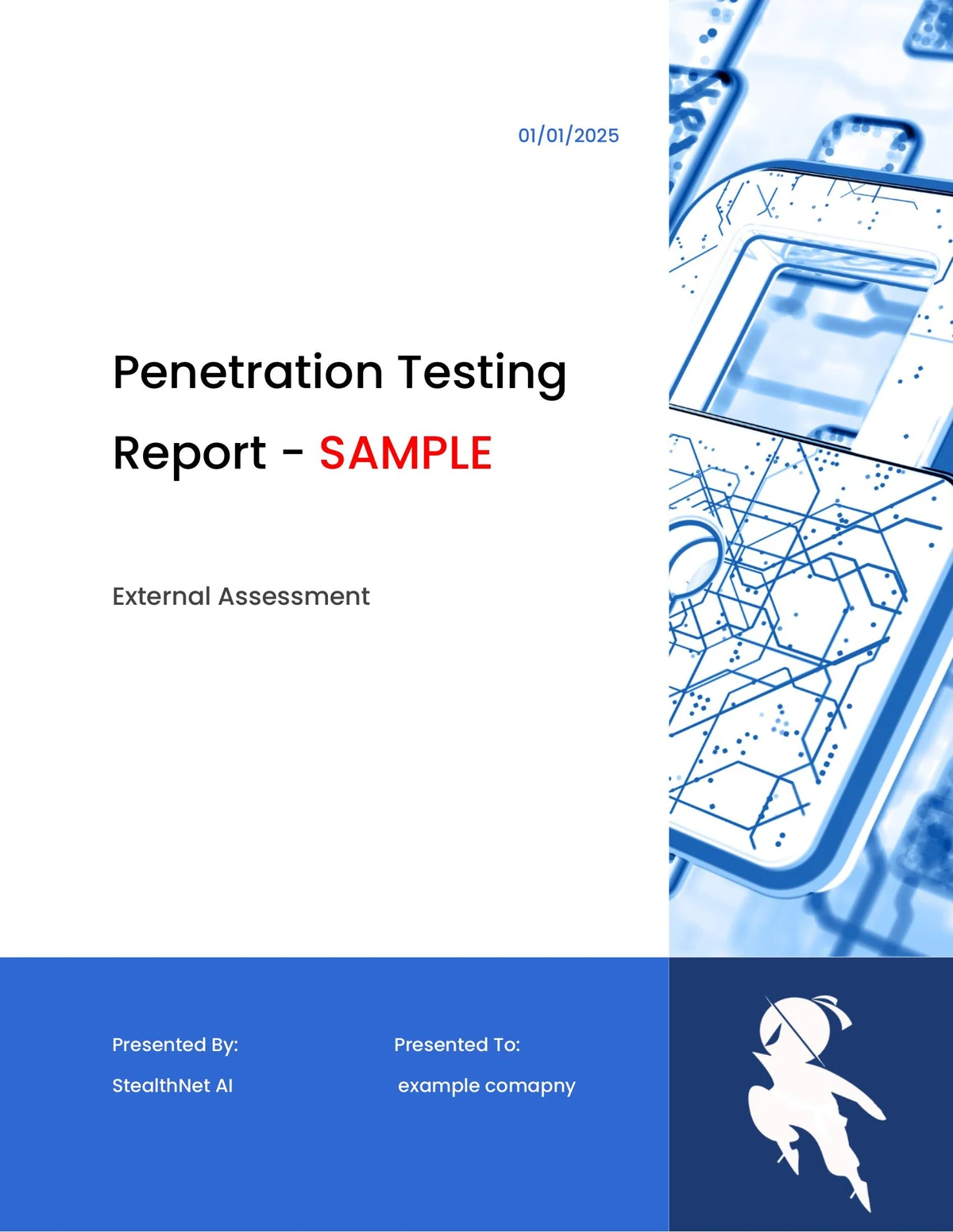



From kickoff to auditor-ready report, delivered in 48 hours.
Pentest evidence is commonly requested 30 to 60 days before audit fieldwork. Give yourself room to remediate and retest.
We specialize in SOC 2 pentest work for SaaS companies, AI platforms, and tech startups. If your auditor or an enterprise buyer asks for penetration-test evidence for SOC 2 Type I or Type II, we scope, test, and deliver an AI SOC 2 pentest in 48 hours or a hybrid SOC 2 pentest audit-ready in 5 to 6 days.
Trusted by Companies Where Security Isn't Optional



What customers say
The best choice for penetration testing
"The testing was thorough and the reports were structured precisely for the regulatory requirements. Explanation of issues along with steps to reproduce and remediation advice were detailed and clear, making corrections a breeze."
Jeremy M.
Director · IKO Corp · Medical Devices
Pentest Reports Built for SOC 2, Not Retrofitted for It.
AI SOC 2 Pentest
$1,500
- 48-hour delivery, AI-only testing
- Exploit-validated findings
- Pre-formatted for SOC 2 CC6.x / CC7.x controls
- One free retest within 360 days
Best for: A first pentest on record, Type I preparation, tight budgets
AI + Validated SOC 2 Pentest
$3,500
The scope most SOC 2 engagements land on
- Everything in the $1,500 scope
- Senior US-based pentester validates and signs every finding
- 48-hour turnaround
- Audit-ready report your assessor will accept
- One free retest within 360 days
Best for: SOC 2 Type II, first audit cycle, assessor-facing evidence
Hybrid SOC 2 Pentest
Starting at $5,000
- Everything in the $3,500 scope
- Deep manual testing by senior US-based pentesters
- Chained exploits, privilege escalation, business logic
- Multi-app and multi-role scope
- Dedicated project manager and private Slack channel
Best for: Multi-app platforms, investor-facing audits, complex scope
What Is a SOC 2 Penetration Test?
A SOC 2 penetration test is an independent, exploit-validated security assessment of the systems in scope for a SOC 2 Type 1 or Type 2 audit. It produces third-party evidence that supports Trust Service Criteria controls such as CC6.1, CC6.6, CC6.7, CC7.1, and CC7.2 in practice, not just on paper. Useful SOC 2 pentest evidence generally includes:
- Defined scope covering production systems that store or process customer data.
- Active exploitation attempts, not just an automated vulnerability scan.
- Findings mapped to SOC 2 controls with CVSS severity, evidence, and reproduction steps.
- Independent third-party testing, which reviewers typically weigh more heavily than internal testing.
- Retest evidence confirming high and critical findings were remediated within the audit window.
Is a penetration test required for SOC 2?
The AICPA does not prescribe penetration testing by name. However, SOC 2 auditors and enterprise buyers commonly request independent penetration-test evidence to support relevant security controls such as CC6.1, CC6.6, CC6.7, CC7.1, and CC7.2. Confirm your specific evidence requirements with your auditor.
- SOC 2 Type 1: often run before issuance to validate control design.
- SOC 2 Type 2: commonly run at least annually inside the audit window, plus after any material change to in-scope systems.
- What makes evidence useful: independent tester, defined production scope, active exploitation rather than a scan, findings mapped to CC6.x and CC7.x, and retest documentation within the audit window.
SOC 2 Penetration Testing Evidence Expectations
What reviewers commonly ask for, how often teams test, and what scope a useful SOC 2 pentest covers.
Does SOC 2 require a penetration test?
The AICPA does not prescribe penetration testing by name. However, SOC 2 auditors and enterprise buyers commonly request independent penetration-test evidence to support relevant security controls such as CC6.1, CC6.6, CC6.7, CC7.1, and CC7.2. Confirm your specific evidence requirements with your auditor. See our SOC 2 penetration testing pricing or compare frameworks on the compliance penetration testing overview.
How often should you run a SOC 2 pentest?
At minimum once per audit window. SOC 2 Type 2 covers 3 to 12 months, so most teams schedule one annual hybrid pentest and add monthly AI validation scans between audits so the report reflects current production state. Any material change to in-scope systems (new region, new auth flow, major rearchitecture) should trigger an additional test inside the same window.
What scope should a SOC 2 pentest cover?
Typically every production system that stores, processes, or transmits customer data: customer-facing web applications, public and partner APIs, external network surfaces, admin portals, and any third-party integration that touches the trust boundary. Internal-only systems out of scope for the audit can be excluded, and the boundary should be documented so reviewers can see what was covered.
What do reviewers usually look for in the report?
Most reviewers look for a written report from an independent third party that includes: defined scope and rules of engagement, evidence of active exploitation (not just a scan), findings with CVSS severity, reproduction steps, and screenshots, every finding mapped to CC6.x or CC7.x controls, remediation guidance, and a retest letter confirming high and critical findings were closed inside the audit window. StealthNet delivers all of the above in one PDF, see a redacted example on the homepage sample report.
Most Companies Fail Their First SOC 2 Pentest.
Your auditor flags pentest quality
Traditional firms deliver reports that don't map to CC6.x and CC7.x controls, which forces rework and delays.
You waited too long
Annual testing windows don't align with audit timelines, leaving you scrambling at the last minute.
You're overpaying
Legacy firms charge $20K to $60K for the same coverage StealthNet delivers with AI pentests starting at $1,500 and hybrid pentests starting at $5,000.
Everything Your Auditor Needs. Nothing They Don't.
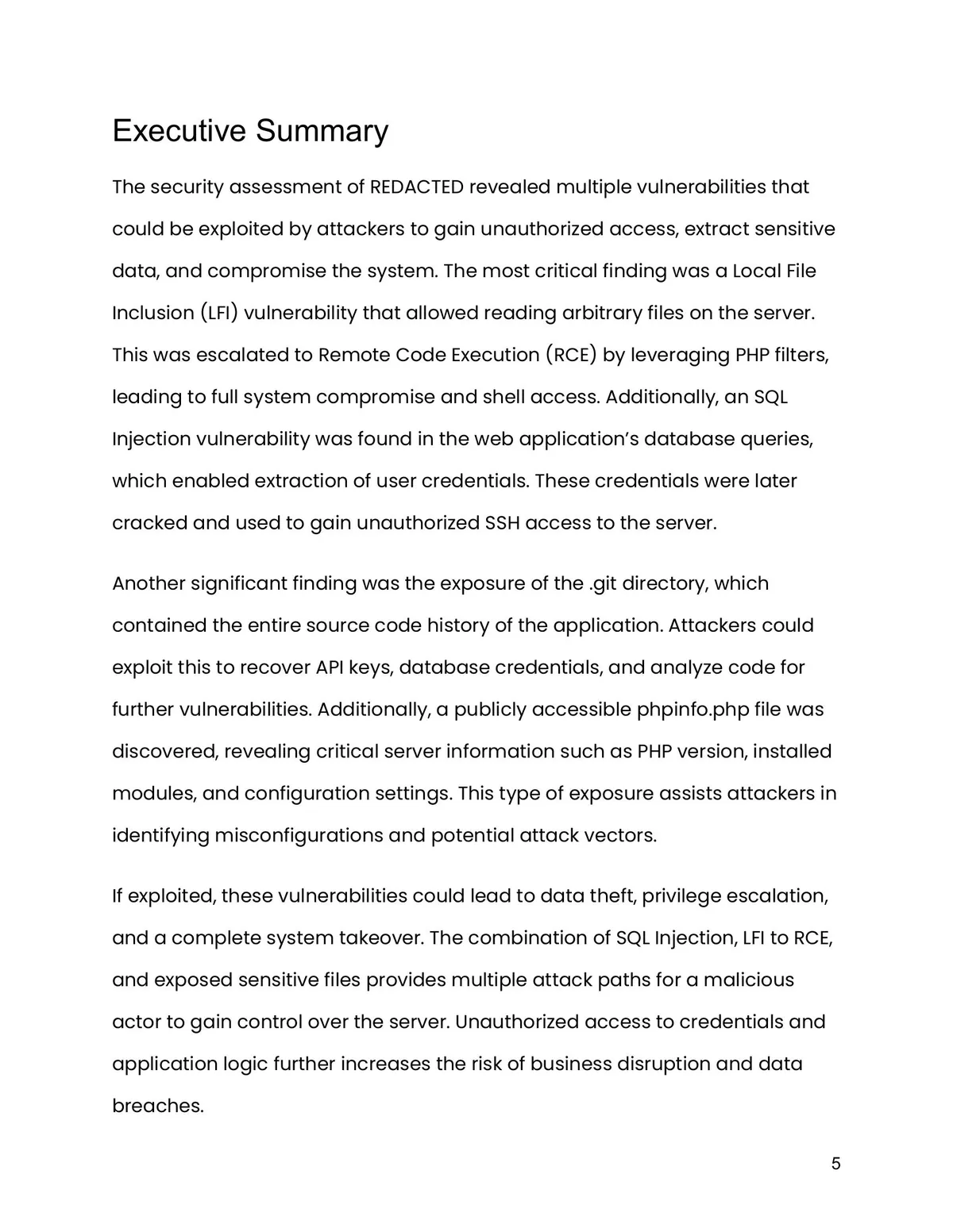
Executive Summary
Business impact overview for leadership and auditors
Technical Findings
CVSS-rated, exploit-confirmed, with screenshots and evidence
SOC 2 Control Mapping
Every finding mapped to CC6.x / CC7.x trust criteria
Remediation Report
Free retest showing all fixes validated and verified
AI Handles Speed. Humans Validate Everything.
A named, US-based senior tester validates every finding before your report is delivered.
Reports are pre-formatted for SOC 2, so there is no manual reformatting and no delays at audit time.
Two speeds, one standard: an AI SOC 2 pentest in 48 hours or a hybrid pentest audit-ready in 5 to 6 days.
SOC 2 Pentest Timeline: Audit-Ready Report in 5–6 Days
From scoping call to a SOC 2-ready report on day 5–6, with a free retest before your audit window closes.
- Day 0
Intake call
30-minute scoping call. We confirm in-scope systems, audit window, and auditor expectations.
- Day 1
Scope locked + kickoff
Test plan, rules of engagement, and credentials handoff via private Slack channel.
- Day 2–4
Active hybrid testing
AI-driven attack simulation validated by a senior US-based pentester. Daily progress updates and high/critical findings posted live to your Slack channel.
- Day 5–6 Audit-Ready
Audit-ready report delivered
Senior-reviewed PDF report delivered on day 5–6. Findings mapped to CC6.1, CC6.6, CC6.7, CC7.1, CC7.2 with CVSS, evidence, and reproduction steps. Executive summary and attestation letter included.
- Day 7–30
Remediation + free retest
We retest every high and critical finding inside the audit window and issue a clean retest letter for your auditor.
SOC 2 Pentest Checklist + Fast-Track for Any Compliance Framework
Download the SOC 2 checklist as your starting point. The Fast-Track engagement covers ISO 27001, HIPAA, PCI DSS, NIST, CMMC, FedRAMP, FDA, and more with the same methodology and timeline.
SOC 2 does not explicitly mandate penetration testing, but auditors and enterprise customers commonly expect evidence that controls are tested, findings are tracked, and remediation is validated. This checklist helps teams prepare audit-ready documentation before their SOC 2 window. The Fast-Track engagement itself supports any compliance framework, SOC 2 is just where most teams start.
- Map pentest evidence to SOC 2 Trust Services Criteria
- Define in-scope systems, APIs, cloud assets, and third-party dependencies
- Package auditor-ready reports, remediation evidence, and retest validation
- Avoid common audit gaps around scope, ownership, and unresolved findings
- Same engagement methodology applies to ISO 27001, HIPAA, PCI DSS, NIST, CMMC, FedRAMP, FDA, and more
Get the Checklist
Sent to your inbox instantly. Need a different framework? Tell us in the timeline field.
SOC 2 Type 1 vs Type 2 Penetration Testing
The pentest evidence reviewers commonly ask for differs by audit type. Here is what each typically involves.
StealthNet delivers Type 1 and Type 2 SOC 2 pentests on the same two-track cadence, AI in 48 hours or hybrid audit-ready in 5 to 6 days, so your auditor has clean evidence whether you're issuing your first SOC 2 report or your fifth.
How SOC 2 Pentest Findings Map to CC6.x and CC7.x
Every StealthNet SOC 2 report tags findings against the specific Trust Service Criteria your auditor will test.
Logical access controls
Authentication, authorization, BOLA / IDOR, privilege escalation, session handling. The most commonly tested control in any SOC 2 pentest.
Boundary protection
External perimeter, VPN, firewall, and segmentation testing. Demonstrates that internet-facing systems are protected against unauthorized access.
Data in transit
TLS configuration, certificate validation, downgrade attacks, sensitive-data exposure across application and API surfaces.
System monitoring & vulnerability detection
Validates that your detection and response stack actually catches the exploit attempts our testers run. Findings include alerting gaps.
Anomaly detection & incident response
Tests whether anomalous activity (brute force, mass enumeration, privilege escalation) is detected, escalated, and contained.
Change management
Optional add-on. Validates that recent production changes have not introduced regressions to the security posture documented at Type 1.
SOC 2 Penetration Test vs Vulnerability Assessment
Both appear in SOC 2 evidence packages, but they answer different questions and only one provides exploit-validated results.
Most SOC 2 programs need both. A continuous vulnerability scan catches drift between audits, and an annual penetration test produces the exploit-validated findings reviewers commonly ask for against CC6.x and CC7.x. StealthNet bundles both so you do not have to manage two vendors.
SOC 2 Type 1 Penetration Testing, Audit-Ready
Pentest evidence formatted specifically for SOC 2 Type 1 audits, the SOC 2 Type 1 to Type 2 transition, and pre-audit readiness.
Pentest before SOC 2 audit
A penetration test before a SOC 2 audit gives your auditor exploit-validated evidence that controls CC6.1, CC6.6, CC6.7, CC7.1, and CC7.2 are not just designed but effective. The single best signal we see for first-time SOC 2 success.
SOC 2 Type 1 web app pentest
Exercises every authenticated and unauthenticated surface on the application that holds customer data, mapped to CC6.1 logical access controls and CC7.1 system monitoring. Pre-formatted for your Type 1 readiness assessment.
SOC 2 Type 1 API pentest
Covers REST, GraphQL, and gRPC endpoints against the OWASP API Top 10, with focused testing of broken object-level authorization (BOLA), token handling, and tenant isolation.
SOC 2 Type 1 external pentest
Validates your internet-facing perimeter, VPN gateways, and remote access portals. Findings ladder up to CC6.6 (boundary protection) and CC7.2 (anomaly detection) and are documented for auditor review.
Pentest after SOC 2 Type 1
The bridge to Type 2. Gives you operating effectiveness evidence across the audit window, surfaces drift between point-in-time Type 1 controls and live production, and seeds your SOC 2 Type 2 readiness package.
Medtech SOC 2 pentest
Has to satisfy both SOC 2 trust criteria and HIPAA Security Rule expectations on the same systems. We scope a single hybrid pentest that covers both, with a unified report your SOC 2 auditor and HIPAA reviewer can each consume.
Managed Service Provider SOC 2 Pentesting
Built for MSPs and MSSPs that need SOC 2 pentest coverage for themselves and their managed clients.
Your MSP's own SOC 2
A hybrid AI plus human pentest of your own infrastructure, mapped to CC6.x and CC7.x, delivered audit-ready in 5–6 days.
Your downstream clients
Per-tenant scoping with per-client reporting so every engagement can stand on its own at audit time. Co-branded reports optional.
You own the relationship. We deliver the pentest.
Bring the client and the SOC 2 timeline. We run the pentest, deliver a co-branded report mapped to CC6.x and CC7.x, and include a free retest.
Prepping Your First Audit? Get a Startup SOC 2 Pentest That Won't Blow the Budget
A focused startup SOC 2 pentest scope covers the production app, customer-facing APIs, and your single AWS or GCP account, mapped to CC6.x and CC7.x for your Type I or first Type II window.
One web app, one API, one cloud account. No fluff in the SOW so the bill matches the surface.
Schedule the test 30 to 60 days before fieldwork so the report and retest both land inside your Type I window.
Startup SOC 2 pentest engagements start at $1,500 for AI and $5,000 for hybrid, with a free remediation retest.
The same report supports your SOC 2 audit, customer security reviews, and follow-on HIPAA or ISO 27001 work.
Quick SOC 2 Pentest Questions
Get Your SOC 2 Pentest Scoped in 24 Hours
Share a few details and we'll follow up within one business day.
SOC 2 Penetration Testing Questions, Answered
Common questions about SOC 2 pentest evidence, scoping, timing, and cost.
Compare full SOC 2 pentest pricing, read our SOC 2 blog guide, review the SOC 2 auditor checklist, or see all compliance frameworks we cover.
Pentest Reports for Every Compliance Framework
Same AI plus human delivery model, mapped to the framework your auditor or customer cares about.
Security Rule §164.312 safeguards
Requirement 11.4 testing
Annex A control validation
800-53, 800-171, and CSF mapped
Level 2 (NIST 800-171) crosswalk
510(k) cybersecurity for medical devices
Moderate/High baseline pentest
EU Article 25 ICT pentest for financial entities
Pentest Services Included in Every Compliance Engagement
Every compliance pentest pulls from these test-type services as needed. Scope is sized to your environment, not padded with hours.