
Quote in 48 hours
Get your SOC 2 pentest scoped
Type II evidence auditors accept. Fixed-fee quote in 24 hours.
SOC 2 Penetration Testing: Is a SOC 2 Pentest Actually Required?
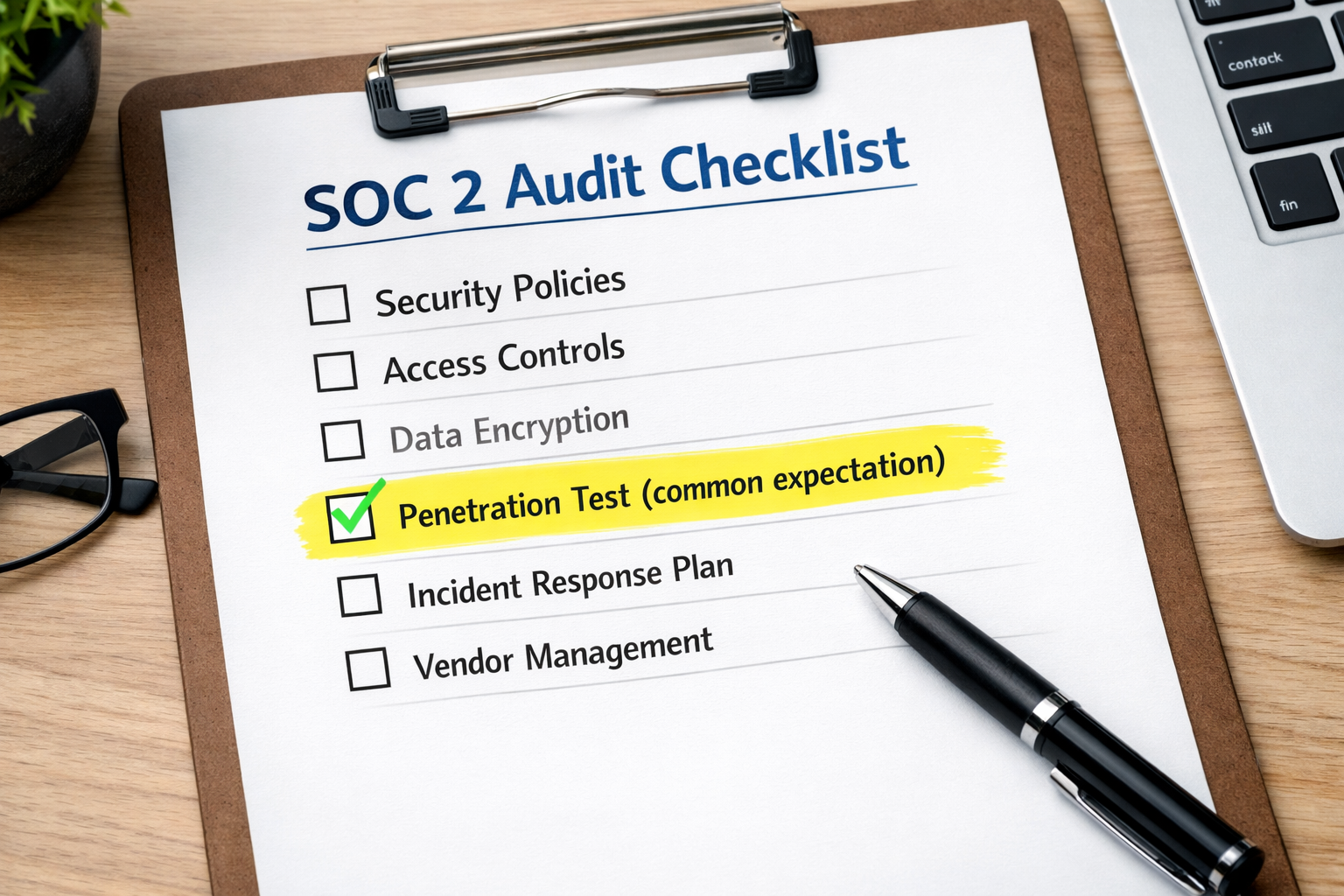
If you are preparing for a SOC 2 audit, one question keeps coming up: is penetration testing required for SOC 2? Ask three auditors and you will likely hear three different answers. Here is the short version: SOC 2 penetration testing is not explicitly mandated by the AICPA Trust Services Criteria, but a well scoped pentest is one of the clearest, auditor friendly ways to prove your security controls actually work, especially around monitoring (CC4.1) and vulnerability management (CC7.1). For most SaaS and cloud companies, our SOC 2 penetration testing services are the fastest path to audit-ready evidence.
What is SOC 2 (and why pentesting comes up so often)?
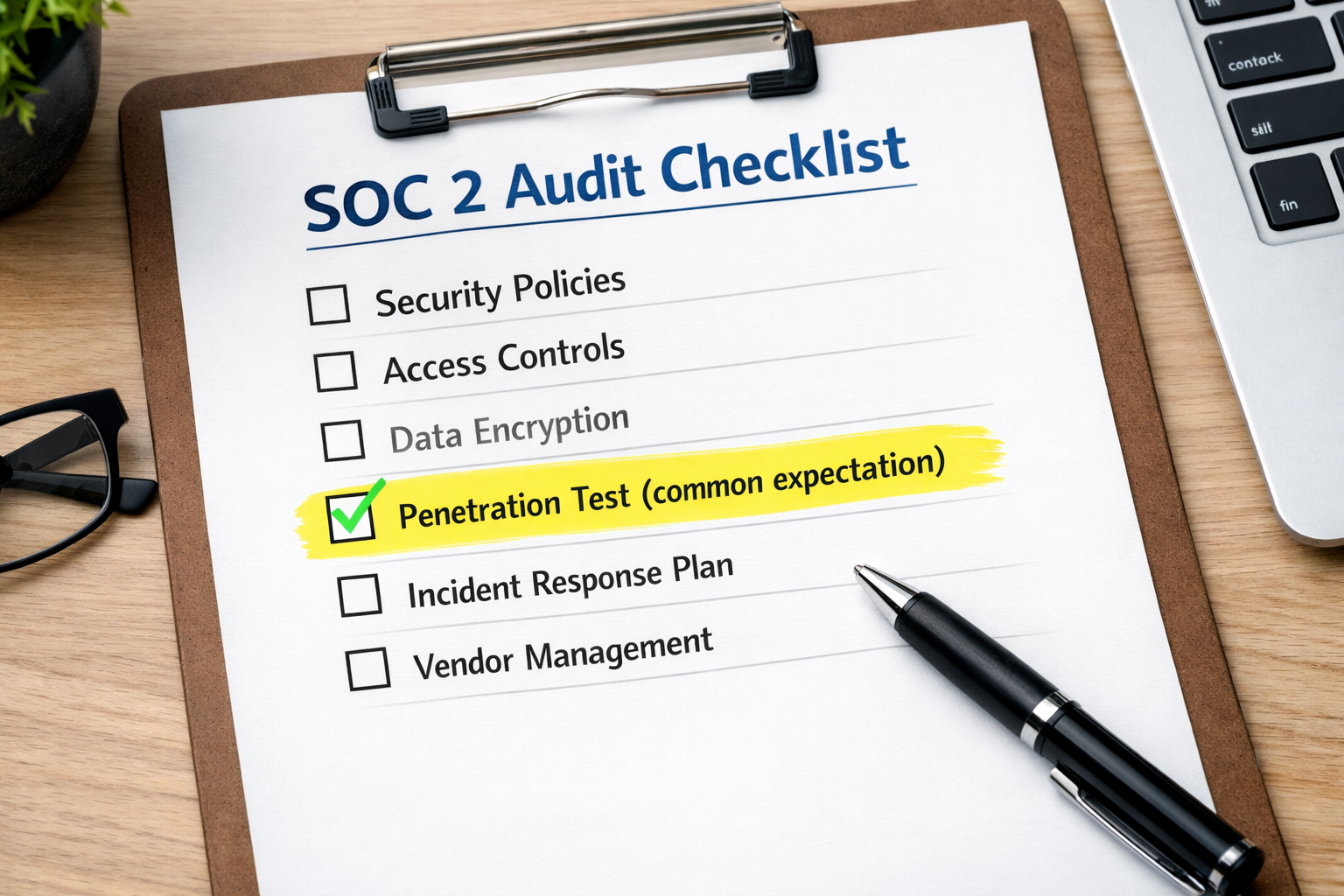
SOC 2 is an attestation report (performed by an independent CPA firm) that evaluates controls related to the Trust Services Criteria: Security, Availability, Processing Integrity, Confidentiality, and Privacy.
Most organizations pursuing SOC 2 are doing it to satisfy customer/vendor security reviews especially SaaS and cloud service providers.
SOC 2 Type I vs Type II (quickly)
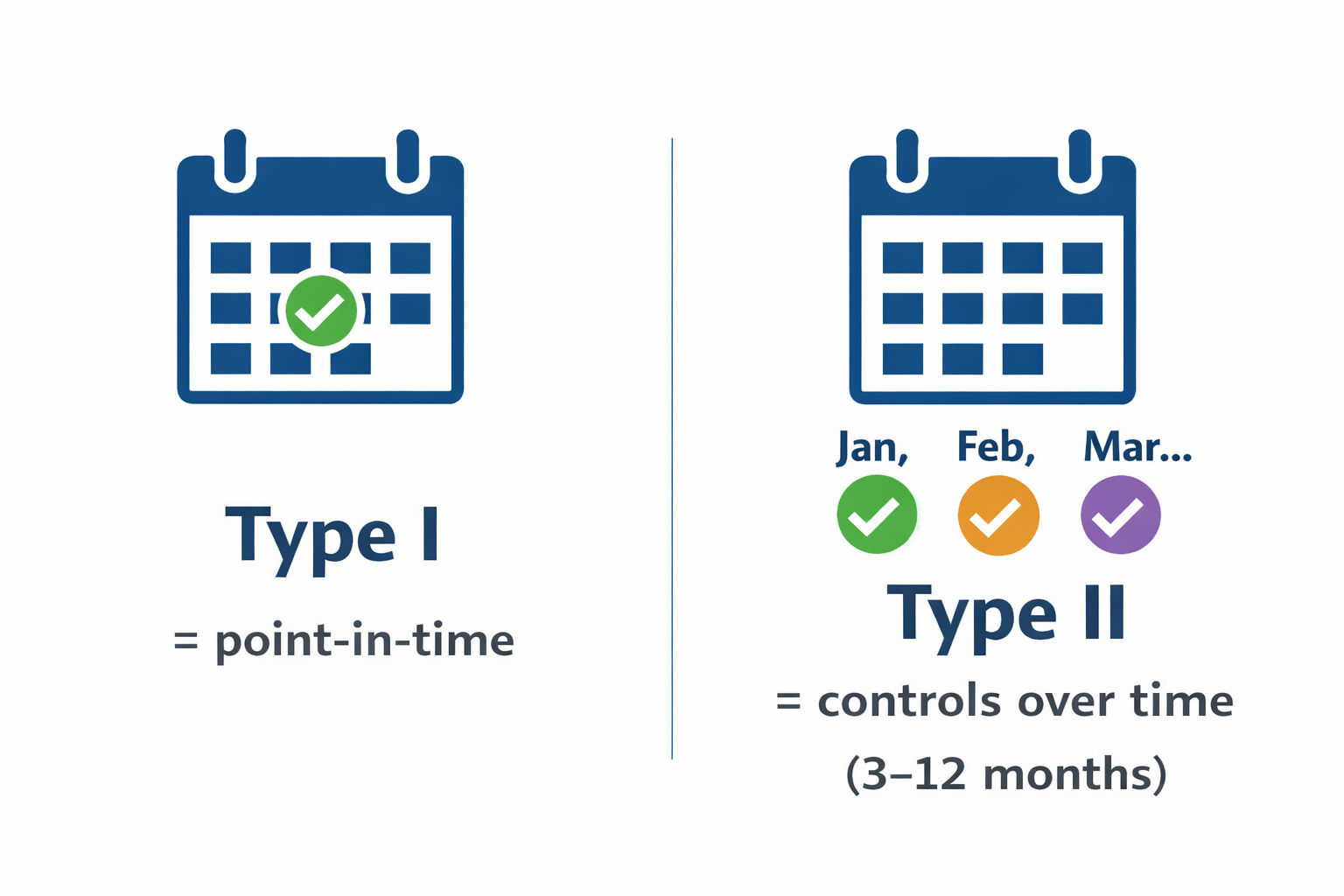
- Type I: Are controls designed appropriately and in place at a point in time?
- Type II: Do controls operate effectively over a period of time (often months)?
Where penetration testing fits into SOC 2 (the criteria that matter)
SOC 2 isn’t a checklist that says “do a pentest.” Instead, auditors look for evidence that you’re performing ongoing and/or separate evaluations of controls and that you have procedures to identify and respond to vulnerabilities.
Two commonly referenced areas:
1) CC4.1 (Monitoring Activities): “Ongoing/separate evaluations”
CC4.1 covers the idea that an organization performs evaluations to confirm controls are present and functioning. Penetration testing is a common “separate evaluation” organizations use to support this.
2) CC7.1 (System Operations): detecting vulnerabilities
CC7.1 focuses on how the organization identifies:
- changes that introduce new vulnerabilities, and
- newly discovered vulnerabilities
This is why vulnerability scanning and vulnerability management show up constantly in SOC 2 conversations even if the framework doesn’t say “must run scanner X weekly.”

Is penetration testing required for SOC 2?
Strictly speaking: no SOC 2 does not universally require a penetration test.
But here’s the practical reality:
- Many auditors and customers expect a third-party penetration test as strong evidence for monitoring/evaluation activities.
- Many SOC 2 readiness programs treat a pentest as a standard annual item (even if it’s not a literal SOC 2 rule).
What can sometimes substitute for a pentest?
Depending on your auditor and risk profile, other “separate evaluations” may help (or partially satisfy expectations), such as:
- Independent internal audit function
- Strong evidence of continuous security testing + remediation
- Certain security certifications or assessments (depending on what your auditor accepts)
The key is: your auditor has the final say on what evidence they’ll accept for your specific system and risk.
Does SOC 2 require vulnerability scanning?
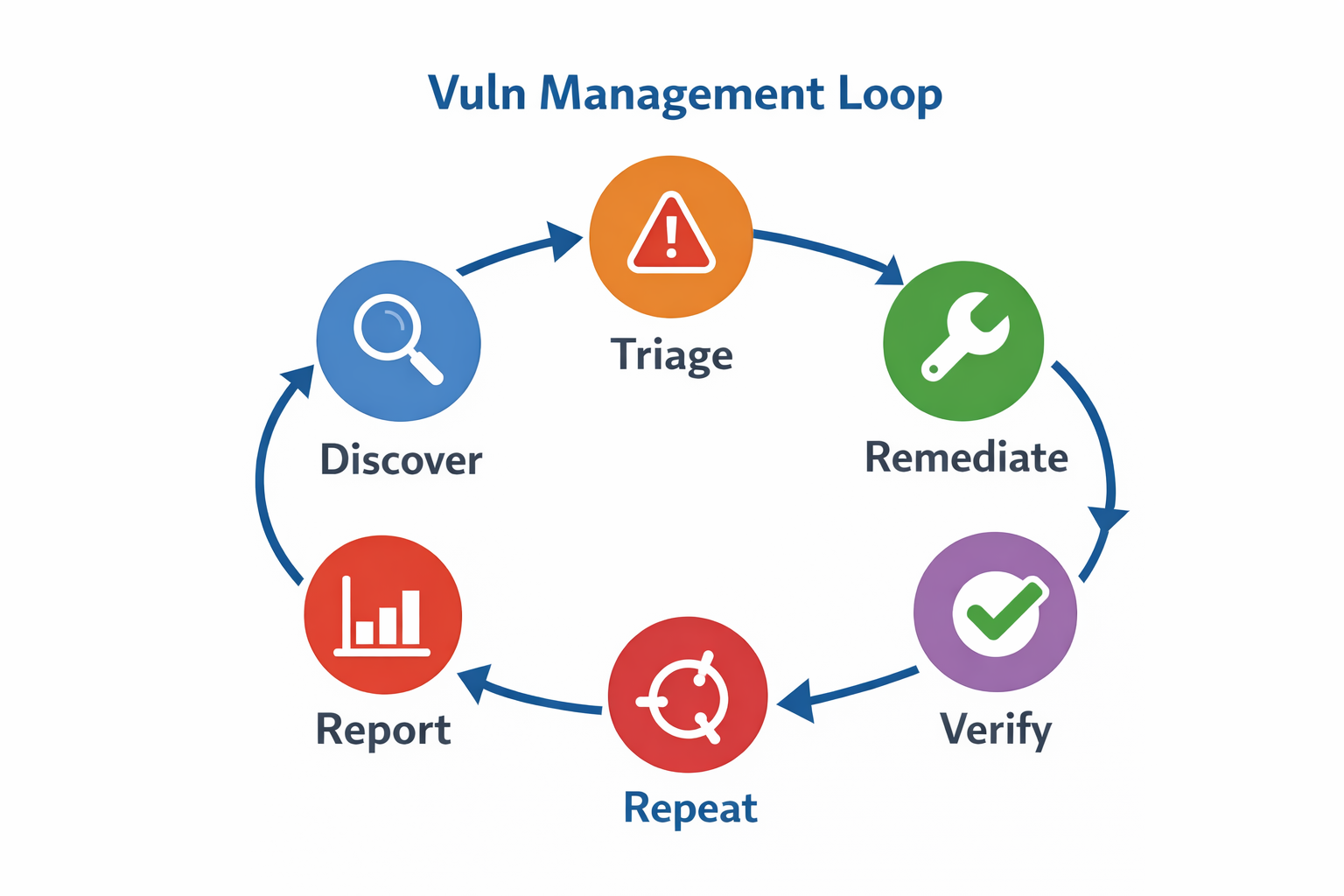
Not explicitly but vulnerability scanning and vulnerability management are commonly used to support CC7.1.
In practice, many companies implement:
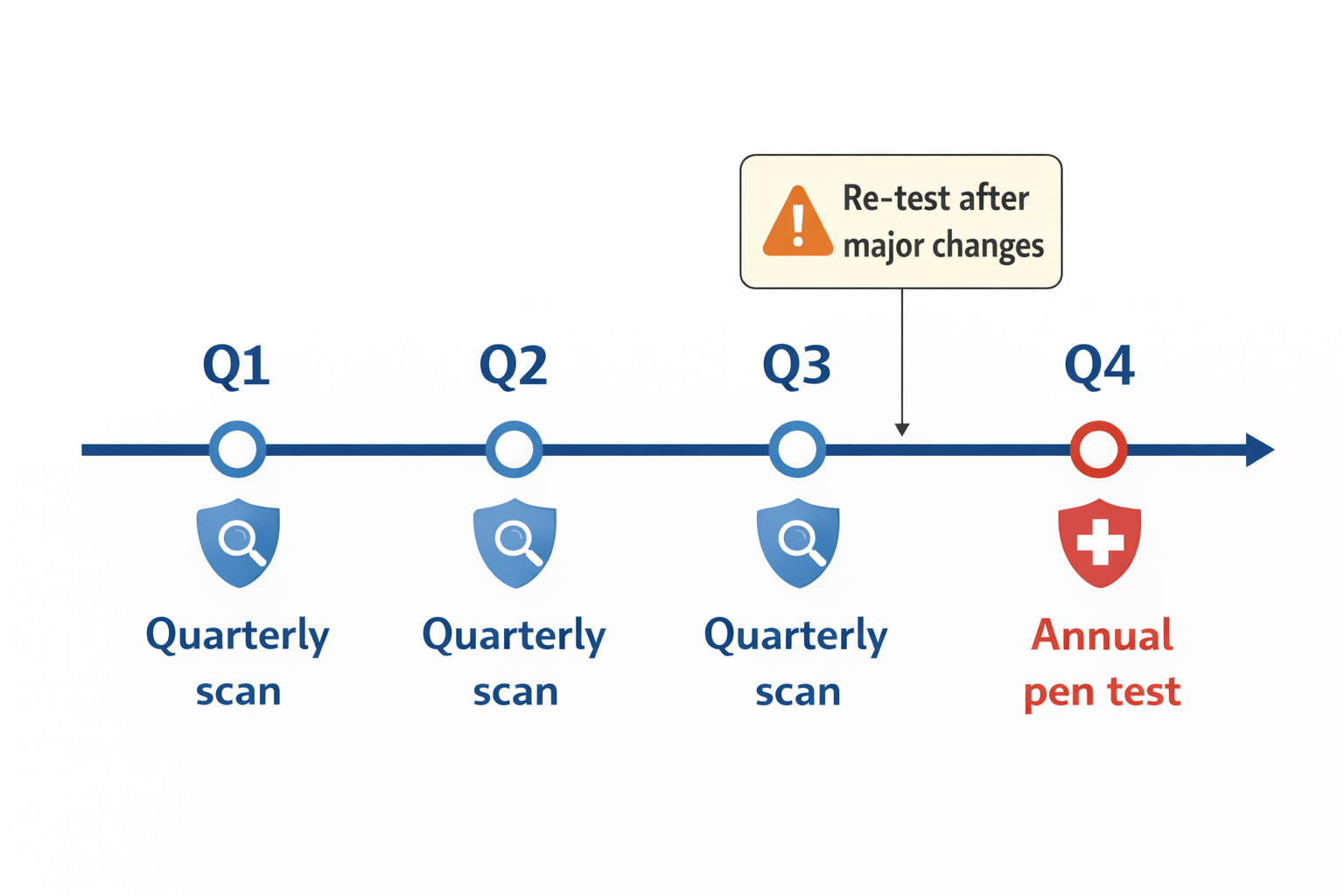
- recurring vulnerability scans (monthly/quarterly is common)
- patching SLAs (e.g., “critical within X days”)
- documented remediation tracking (tickets + evidence)
Penetration testing vs vulnerability scanning (what auditors actually care about)
Here’s the clean way to explain it in a SOC 2 context:
What it is :
Human-led (often manual) testing that simulates attacker behavior
Automated detection of known issues/misconfigurations
Best for:
Proving real-world exploitability, business logic flaws, chained attacks
Broad coverage, continuous detection, fast feedback
SOC 2 angle:
Strong “separate evaluation” evidence (CC4.1)
Strong vulnerability detection evidence (CC7.1)
Output:
Narrative report + evidence + remediation guidance
Findings list + severity + remediation recommendations
Many organizations do both: scanning continuously + a periodic pentest to validate controls and find what scanners miss.
How often should you do a SOC 2 pentest?
SOC 2 doesn’t give a universal cadence, but the most common “safe” pattern organizations follow is:
- At least annually
- After significant changes (major release, infra migration, new auth model, new tenant isolation model, etc.)
What should a “SOC 2 pentest” include? (scope that won’t get rejected)
A SOC 2 pentest should generally cover what’s in-scope for your SOC 2 system description the systems that store/process/transmit customer data or support security commitments.
Common SOC 2 pentest scopes include:
- External perimeter (internet-facing IPs, VPN, gateways, WAF/CDN configs)
- Web application(s) (customer portal, admin console)
- APIs (public + partner APIs)
- Cloud configuration review (high-risk misconfigs, identity, storage exposure)
- Authentication/authorization paths (SSO, MFA, session handling, role enforcement)
If you do only one area, make sure it’s the one customers actually care about (usually web app + API, plus any critical perimeter exposure).
What auditors want as evidence (your SOC 2 “pentest packet”)
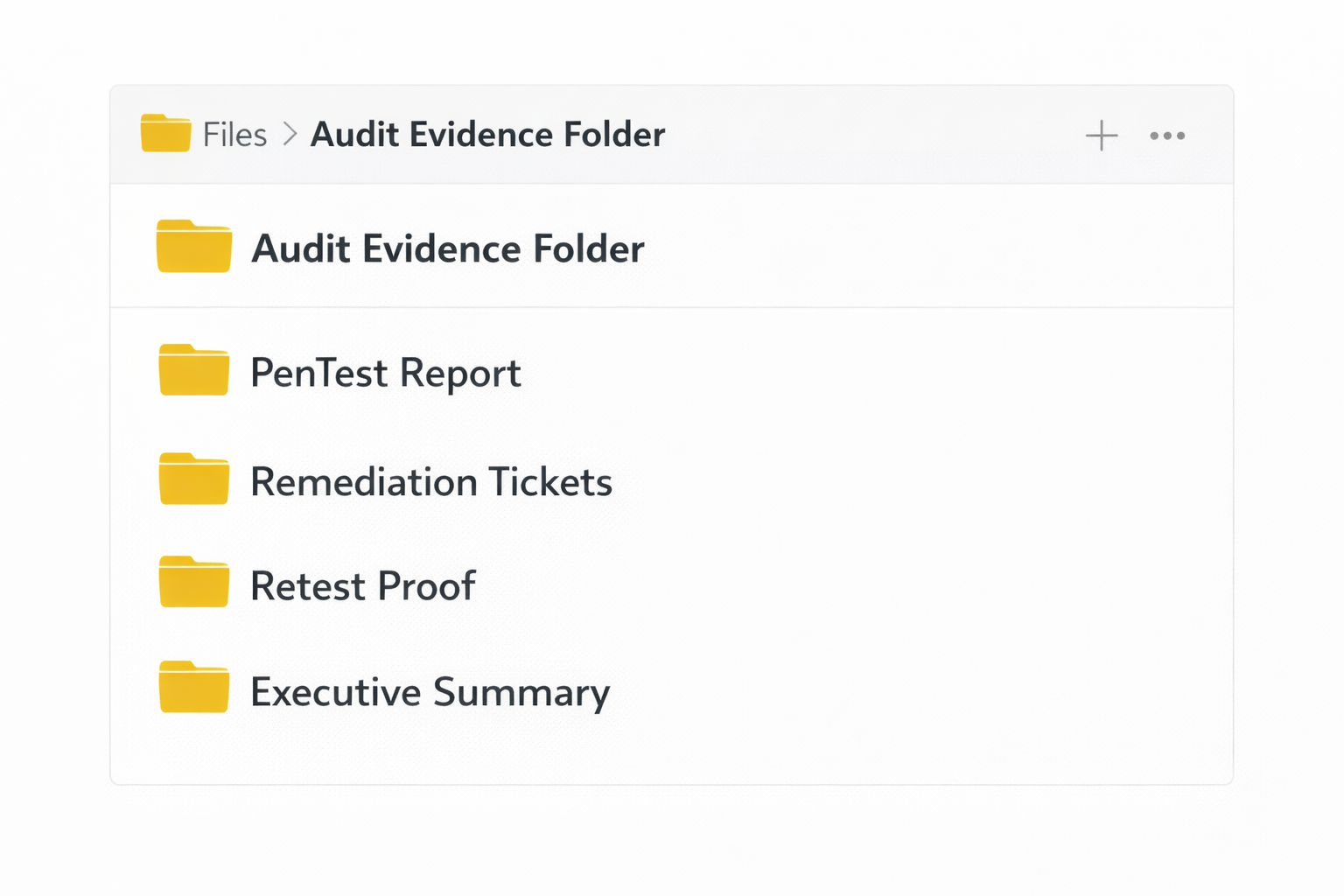
To make your auditor happy, aim to produce a clean evidence bundle:
- Final penetration test report (date, scope, methodology, findings, severities)
- Executive summary / attestation letter (optional but helpful)
- Remediation tracking (tickets, owners, dates, proof of fixes)
- Re-test evidence for high/critical issues (or documented risk acceptance)
This is what turns “we did a pentest” into “we have defensible evidence.”
Common SOC 2 penetration testing mistakes (and how to avoid them)
- Testing the wrong scope: pentesting a marketing site while your API handles customer data
- No remediation trail: fixing issues without tickets/evidence = auditor pain
- No retest: leaving critical items unresolved (or unverified)
- Scanner-only “pentest”: a report that’s basically automated output with little validation can create credibility issues
FAQ
Does SOC 2 require penetration testing?
No, not as a strict universal rule. But pentesting is frequently used (and often expected) as strong evidence for monitoring/evaluation activities.
Does SOC 2 require vulnerability scanning?
Not explicitly, but vulnerability detection/monitoring and vulnerability management practices are commonly used to support CC7.1.
What’s the “best” minimum approach if you want the smoothest audit?
A typical low-friction setup is:
- recurring vulnerability scanning + remediation workflow
- an annual third-party pentest scoped to your SOC 2 system
- retesting critical/high findings
Is a pentest more important for Type II than Type I?
Type II is about demonstrating controls operate effectively over time, so having repeatable vulnerability management evidence (and a well-documented pentest + remediation trail) tends to be more compelling.
Conclusion
SOC 2 doesn’t universally mandate penetration testing, but if you want to reduce audit friction and increase customer trust, a well-scoped SOC 2 penetration test paired with a real vulnerability management program is one of the most straightforward ways to demonstrate that your controls aren’t just written down, they actually work.
If you want a simple, honest takeaway you can reuse internally and externally:
SOC 2 penetration testing isn’t always “required,” but it’s commonly expected and it’s often the easiest evidence to defend.