
CMMC Pentest Services for DoD Contractors
Level 2 assessors want evidence of independent testing against NIST 800-171. Named senior US testers, signed findings, scoped in 24 hours.
Get Scoped in 24 Hours
Sample reportShare a few details and pick a time to chat right after.
Trusted by Companies Where Security Isn't Optional




From CUI scope to assessor-ready evidence in days
Define your CUI boundary, AI agents enumerate and exploit, a senior tester validates against CMMC controls, and you receive evidence aligned to your C3PAO assessment.
Confidential · Sample
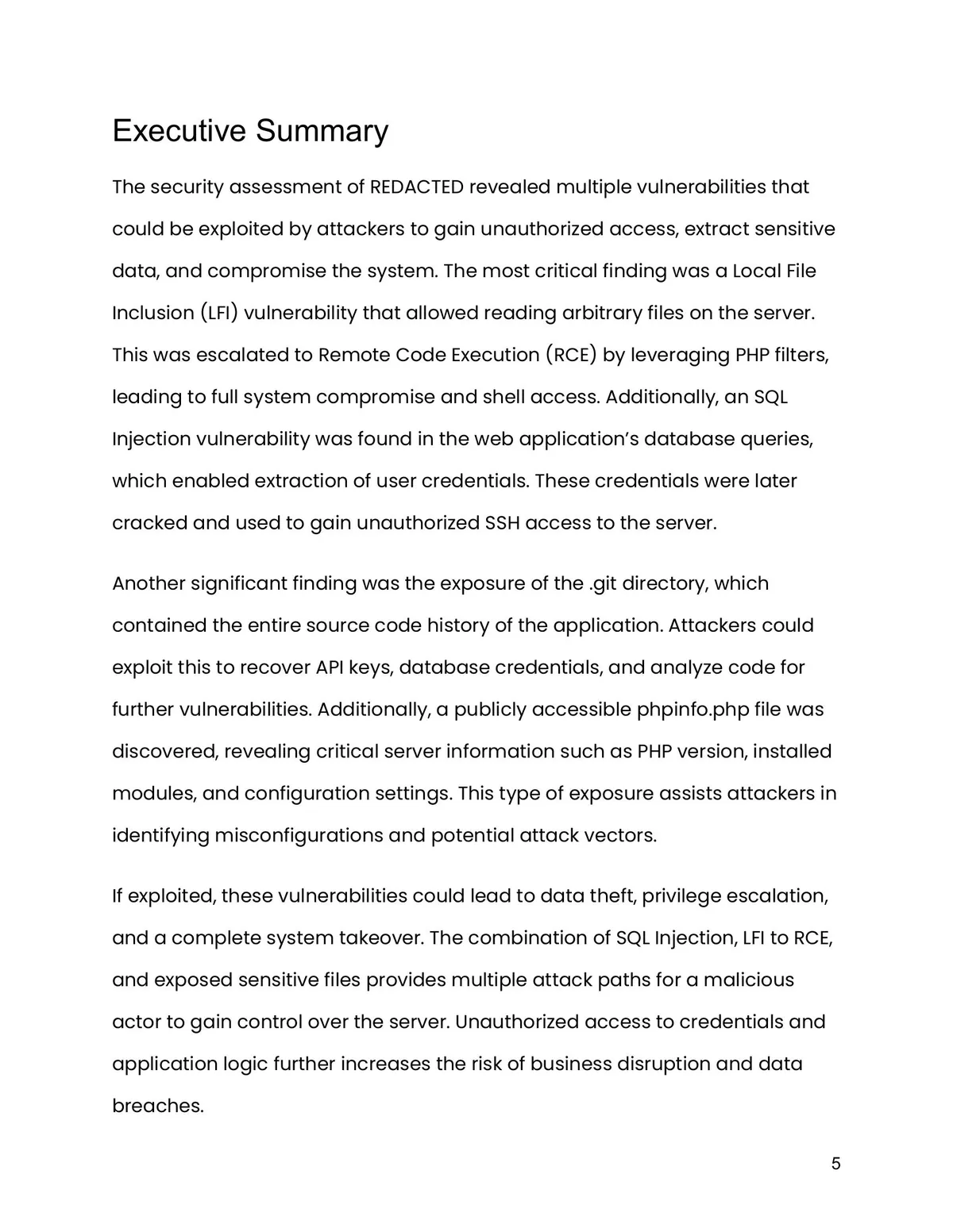
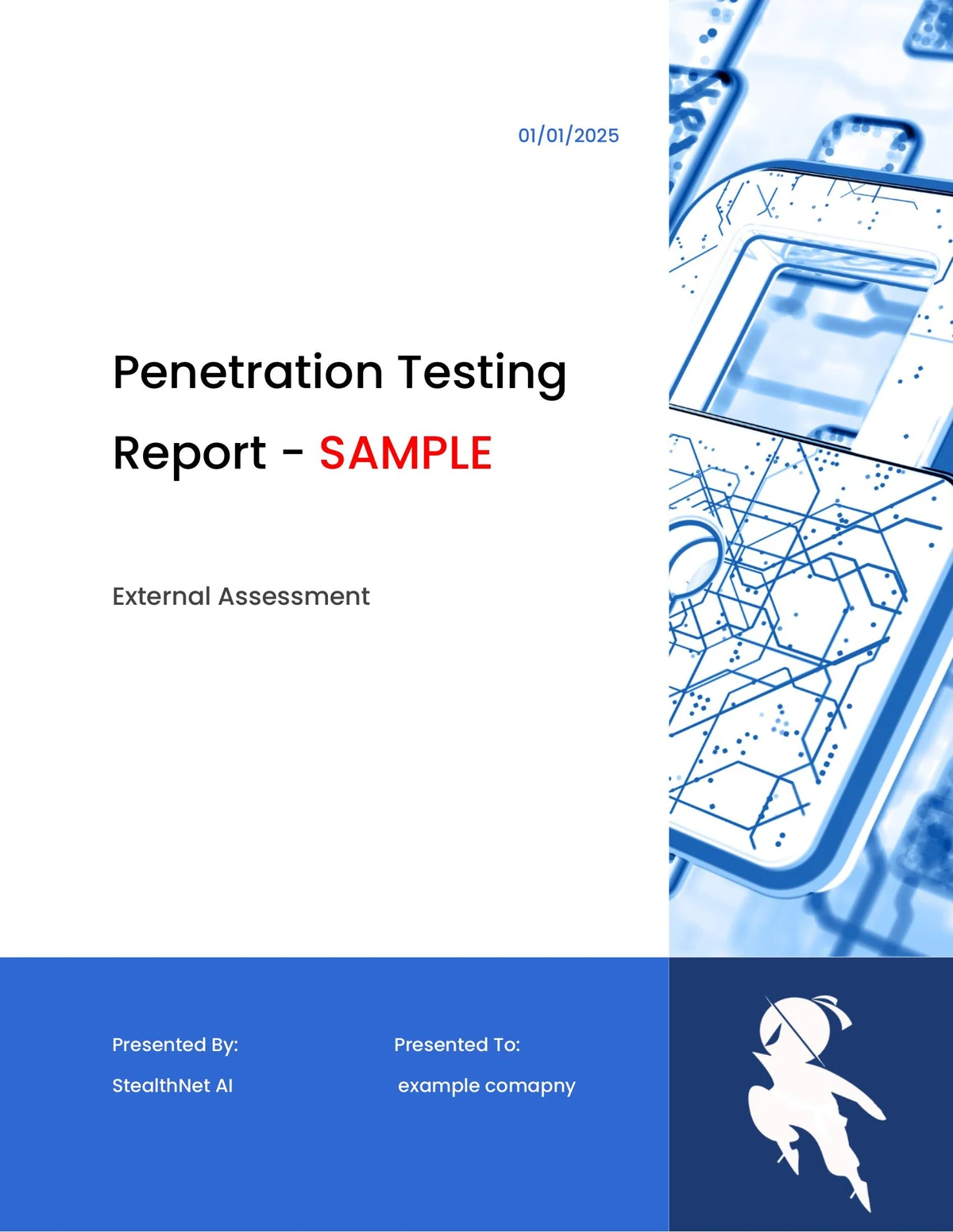



From kickoff to auditor-ready report, delivered in 48 hours.
DoD Contracts Require Proven CUI Protection.
C3PAO flags weak evidence
Assessors expect penetration testing evidence mapped to NIST 800-171 controls. Vulnerability scans alone won't demonstrate control effectiveness.
Contract deadlines won't wait
Losing a DoD contract because your assessment isn't ready costs far more than proactive testing. Don't let security gaps delay your certification.
Legacy firms overcharge for compliance
Traditional consultancies charge $20K to $60K for CMMC pentests. StealthNet delivers AI pentests starting at $1,500 and hybrid pentests from $5,000.
CMMC Pentest Checklist: What C3PAOs Actually Look For
Get a practical checklist for CUI scoping, NIST 800-171 evidence collection, remediation tracking, and assessment-ready penetration testing documentation.
CMMC Level 2 expects demonstrable evidence that NIST 800-171 controls protecting CUI actually work. This checklist helps DoD contractors and their MSPs prepare audit-ready pentest documentation before a C3PAO assessment.
- Map pentest evidence to NIST 800-171 control families
- Define your CUI boundary, GovCloud assets, and in-scope systems
- Package C3PAO-ready reports, remediation evidence, and retest validation
- Avoid common assessment gaps around scope, ownership, and POA&M tracking
Get the Checklist
Sent to your inbox instantly. No spam.
Pentest Reports Built for CMMC, Not Retrofitted for It.
StealthStrike
$1,500
- 48-hour delivery
- Exploit-validated findings
- Mapped to NIST 800-171 controls
Best for: Annual reassessment, CUI protection validation, gap analysis
Hybrid (AI + Human) Pentest
Starting at $5,000
Typical engagements range from $5,000 to $10,000 depending on scope
- AI attack simulation + senior US-based pentester validation
- 48-hour first report
- Dedicated project manager + private Slack channel
- Compliance-ready report + free retest included
Best for: Level 2 C3PAO readiness, initial assessment, DoD contract requirements
What is CMMC penetration testing?
CMMC penetration testing is an authorized, exploit-driven security assessment of every system that stores, processes, or transmits Controlled Unclassified Information (CUI) under the Cybersecurity Maturity Model Certification program. Unlike a vulnerability scan, a CMMC pentest actively exploits weaknesses to prove which findings are real, which are exploitable, and what an attacker could actually do inside your CUI boundary.
CMMC Level 2 and CMMC 2.0 Penetration Testing Requirements
CMMC 2.0 restructured the original five-level model into three levels. Level 2 is the most common requirement for defense contractors handling CUI, and it mandates penetration testing aligned to NIST SP 800-171 practice families. Our CMMC Level 2 pentest services cover your full CUI boundary including network enclaves, endpoints, cloud systems, and remote access paths, with findings mapped directly to the practice families C3PAOs review.
CMMC Level 2 is built directly on NIST SP 800-171, so a CMMC Level 2 penetration test maps cleanly to the same control families a 800-171 assessor expects to see: Access Control (3.1), Audit and Accountability (3.3), Configuration Management (3.4), Identification and Authentication (3.5), Risk Assessment (3.11), Security Assessment (3.12), and System and Communications Protection (3.13). C3PAO assessors treat third-party penetration testing as the strongest evidence that controls 3.11.2 (vulnerability scanning) and 3.12.1 (security control assessment) are not just documented but actually effective.
A modern CMMC pentest covers more than the perimeter. It looks at external network exposure, public web applications, internal APIs, identity and SSO surfaces, GovCloud and FedRAMP-aligned cloud configurations, and the lateral movement paths an attacker would use after gaining a foothold. Each finding is then translated into the NIST 800-171 control it violates and the corresponding CMMC Level 2 practice ID, so your assessment package reads the way a C3PAO expects.
CMMC Level 1 covers only Federal Contract Information (FCI) with 17 basic safeguards and does not formally require penetration testing. CMMC Level 3 layers on selected NIST SP 800-172 enhanced practices and expects regular adversarial assessments, including red team operations. Most defense contractors today are scoped at CMMC Level 2 where penetration testing is the difference between a smooth assessment and a conditional certification.
CMMC Level 2 Pentests, By Attack Surface
Each engagement is scoped against your CUI boundary and reported with the matching NIST 800-171 control mappings.
CMMC Level 2 web app pentest
Authenticated and unauthenticated testing of every web application inside your CUI boundary, covering OWASP Top 10, business logic abuse, and SSO/identity weaknesses. Findings map to 800-171 3.1, 3.5, 3.13, and 3.14.
CMMC Level 2 API pentest
REST, GraphQL, and gRPC endpoints exercised against the OWASP API Top 10, with deep focus on broken object-level authorization (BOLA), token handling, and CUI exposure through API responses.
CMMC Level 2 external pentest
Full external attack surface enumeration and exploitation across your internet-facing perimeter, GovCloud edges, VPN gateways, and remote access portals. Maps to 800-171 3.13 and 3.14.
CMMC Level 2 internal network pentest
Assumed-breach testing inside your CUI environment to validate segmentation, privilege boundaries, lateral movement controls, and detection coverage. Maps to 800-171 3.1, 3.4, and 3.13.5.
CMMC Level 2 hybrid pentest
Our flagship engagement: AI agents continuously sweep web, API, and external surfaces while a US-based senior tester runs validated exploitation chains and writes the C3PAO-ready report.
CMMC Level 2 cloud and GovCloud review
Configuration and identity testing across AWS GovCloud, Azure Government, and Microsoft 365 GCC High tenants that hold CUI, including IAM, KMS, logging, and conditional access.
Mapped to NIST 800-171 Controls.
Access Control (3.1)
Testing of authentication, authorization, and CUI access management policies
System & Comms (3.13)
Validation of network boundary protections and communications security
Audit & Accountability (3.3)
Assessment of logging, monitoring, and audit trail integrity
Risk Assessment (3.11)
Identification of vulnerabilities through real-world attack simulation
AI Handles Speed. Humans Validate Everything.
A named, US-based senior tester validates every finding before your report is delivered.
Reports are mapped to NIST 800-171 controls, so there is no manual reformatting for C3PAO assessors.
Most clients receive their first report within 48 hours of scoping call completion.
Choosing a CMMC Level 2 Pentest Vendor
What CMMC Level 2 pentest services and providers should look like before you sign an SOW.
US-based senior testers
Every CMMC Level 2 pentest provider should staff the engagement with US persons. CUI exposure to non-US testers creates downstream ITAR and DFARS issues you do not want to explain to a C3PAO.
NIST 800-171 control mapping included
The report should map every finding to the specific NIST 800-171 control and CMMC Level 2 practice ID. If mapping is an upsell, the vendor is not a true CMMC pentest services provider.
CUI scoping experience
Look for a vendor that helps you define and validate the CUI boundary, not one that hands you a checklist. Scoping is where most CMMC pentest engagements go off the rails.
Free retest after remediation
C3PAOs want to see fixes verified. A reputable CMMC pentest vendor includes one retest in the engagement so your final report reflects a clean state.
Hybrid AI plus human delivery
AI alone misses business logic. Humans alone are slow and expensive. The strongest CMMC Level 2 pentest services combine both, like the StealthNet hybrid model.
C3PAO-ready deliverables
Ask to see a redacted sample report. The structure, evidence quality, and control mapping you see is exactly what your assessor will see.
Scoping the CUI Boundary Before You Test
Every CMMC Level 2 penetration test starts with one question: where does CUI actually live? CUI scoping is the process of identifying every system, application, network segment, cloud tenant, and endpoint that stores, processes, or transmits Controlled Unclassified Information, then drawing a defensible boundary around them. The CUI boundary is what a C3PAO will assess and what your pentest must cover.
A practical CUI scoping exercise pulls from three sources: your System Security Plan (SSP), your asset inventory, and your data flow diagrams. Anything that touches CUI in any of those three sources is in scope. Anything that is genuinely segmented (separate VLANs, separate identity providers, no shared admin paths) can be carved out, but only if segmentation can be proven during testing.
Common CUI scoping mistakes we see during penetration testing engagements: shared jump hosts that bridge CUI and non-CUI environments, federated SSO providers that grant access to CUI apps from non-CUI accounts, backup systems that pull CUI into a wider DR environment, and developer laptops that hold CUI artifacts outside the "production" boundary. Each of these collapses your boundary and expands the penetration test scope, so it is better to find them now than during a C3PAO assessment.
How a CMMC Level 2 Penetration Test Works
Six steps from scoping kickoff to a C3PAO-ready report and verified remediation.
Define CUI scope and boundary
We work with your team to identify every system that stores, processes, or transmits Controlled Unclassified Information, aligning the test scope with your System Security Plan (SSP) and asset inventory.
Plan the CMMC pentest engagement
We map the engagement to the relevant NIST 800-171 control families and CMMC Level 2 practice IDs, agree on testing windows, and establish secure communications.
Run AI-driven attack simulation
Our AI pentest agents continuously enumerate, fingerprint, and attempt exploitation across web apps, APIs, external network surfaces, and (when in scope) internal segments.
Validate findings with a US-based senior tester
A named senior penetration tester reviews every AI-surfaced finding, eliminates false positives, and performs manual exploitation chains the AI cannot reach on its own.
Deliver the CMMC-ready report
You receive an exploit-validated report with each finding mapped to the corresponding NIST 800-171 control and CMMC Level 2 practice ID, ready to hand to your C3PAO.
Remediate and retest
After your team remediates, we run a free retest to verify fixes and update the report so your assessment package reflects the final, clean state of your CUI environment.
CMMC Pentesting Questions
Looking for government contractor pentesting? Compare full CMMC pentest pricing or see all compliance frameworks we cover.
What a CMMC Auditor Wants to See in Your Pentest Report
Reports built to satisfy Big Four assessors, QSAs, 3PAOs, and customer security reviews on the first pass.
NIST 800-171 + CMMC practice IDs
Every finding tagged to a NIST 800-171 control and the corresponding CMMC Level 2 practice ID so C3PAOs can ingest evidence without re-mapping.
CUI boundary validation
Proof that the asset categorization and CUI enclave actually isolate as documented in your SSP, including SPRS scoring impact for each finding.
POA&M-ready remediation
Severity, exploit path, and remediation guidance written in the format your C3PAO and DoD primes expect in POA&M tracking.
Tester qualifications statement
Named US-based senior tester credentials (OSCP, OSWE, GPEN) included in the report so C3PAOs accept the engagement as qualifying independent assessment.
Pentest Reports for Every Compliance Framework
Same AI plus human delivery model, mapped to the framework your auditor or customer cares about.
Trust Services Criteria CC6/CC7
Security Rule §164.312 safeguards
Requirement 11.4 testing
Annex A control validation
800-53, 800-171, and CSF mapped
510(k) cybersecurity for medical devices
Moderate/High baseline pentest
EU Article 25 ICT pentest for financial entities
Pentest Services Included in Every Compliance Engagement
Every compliance pentest pulls from these test-type services as needed. Scope is sized to your environment, not padded with hours.
Quick CMMC Pentest Questions
Get Your CMMC Pentest Scoped in 24 Hours
Share a few details and we'll follow up within one business day.